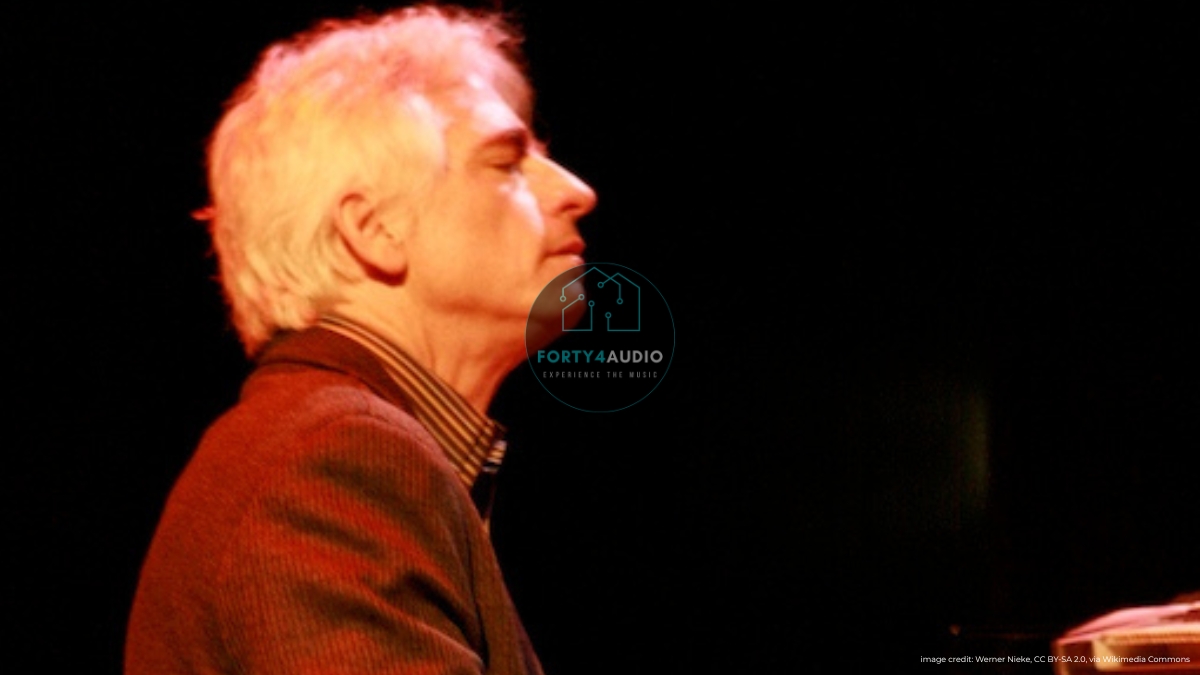
The Best of David Benoit 1987–1995 asks to be heard as an evening, not a résumé.
A collection like this could rush. It doesn’t. The order feels considered, almost domestic, as if someone who knows these pieces well set them down the way they might set lamps in a room – enough light to see, never enough to glare.
The opening tracks arrive with clarity rather than spectacle. The piano is present before it is impressive. Notes land cleanly, then leave space behind them. You can hear how the record wants you to settle first, to let your breathing adjust to the tempo it prefers.
As the sequence unfolds, rhythm sections come and go like weather. A groove appears, stays long enough to be trusted, then eases back. Nothing announces itself as a “moment.” Instead, the album works through familiarity – melodies that feel remembered rather than introduced.
Transitions matter here. Ballads don’t interrupt the flow; they soften it. Up-tempo pieces don’t spike the energy; they widen it. The emotional arc moves laterally, not vertically – less climb, more drift. This is music that understands momentum without urgency.
Repeated listening reveals how carefully the piano voice is placed across the running order. Early on, it leads. Later, it listens. By the middle of the album, the piano seems less concerned with statement and more with presence, letting bass and drums finish sentences it begins.
There’s a particular quiet confidence in how mid-sequence tracks lean into warmth. Not sentimentality – warmth. The kind that comes from time spent, not from emphasis. You start noticing the way reverbs trail off, how pauses between phrases carry as much feeling as the phrases themselves.
On vinyl, the side breaks feel natural, like standing up to refill a glass. On digital, it helps to preserve those pauses anyway. The album benefits from interruption that is intentional rather than accidental.
As the record moves toward its final stretch, there’s no attempt to summarize what came before. The closing tracks don’t resolve; they release. The piano becomes lighter, less anchored, as if the evening is thinning out and conversation is giving way to shared silence.
By the end, it’s not the individual songs that linger, but the atmosphere they’ve built together – a sense of unforced calm, of attention without demand.
The needle lifts.
The room stays.