When Sgt. Pepper’s Lonely Hearts Club Band filled the room in 1967, it arrived wrapped in color, characters, and spectacle. The next year, The Beatles returned with something that looked almost like silence.
Just white.
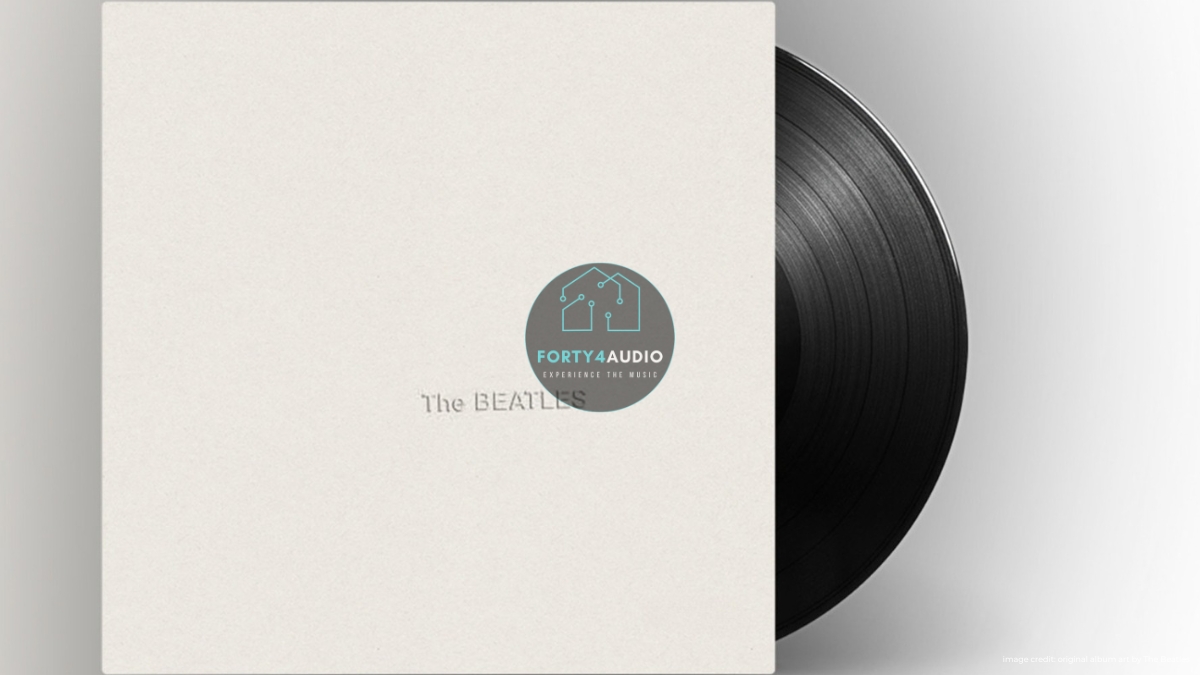
The cover of The Beatles – what listeners came to call The White Album – contains almost nothing at all. No photographs. No design. Only the band’s name, lightly embossed. On a shelf, it almost disappears. In a room, it feels like a pause.
It is difficult now to remember how unusual that must have felt in 1968. After the kaleidoscope of Sgt. Pepper, the blank sleeve seemed almost like a clearing of the table.
Inside were thirty songs.
Not a concept. Not a single sound. Not even a single band, at times. Instead, fragments of personalities, moods, and ideas recorded during months of strained sessions at EMI Studios in London, after the group returned from studying Transcendental Meditation in Rishikesh, India. Many of the songs began there with only acoustic guitars and notebooks.
Listening slowly, you start to hear the album less as a collection and more as a landscape. Rooms connected by hallways. Doors half open. Sometimes the band is together. Sometimes someone is alone.
And the order of those rooms matters.
The record opens with movement.
“Back in the U.S.S.R.” does not arrive gently. A jet engine cuts through the silence, the sound swelling as if a plane is descending directly into the room. Then the band drops in with pounding piano, thick guitars, and stacked harmonies.
It is easy to hear the humor on the surface. The song plays with the language of American surf rock while turning its gaze toward Soviet geography. California becomes Ukraine. Beach culture becomes Cold War postcard imagery. Yet the joke works because the band commits to the sound so completely. The drums – played largely by Paul McCartney during Ringo Starr’s temporary departure – push the song with restless energy. The guitars shimmer in a way that recalls The Beach Boys, and the layered harmonies feel deliberately oversized.
But as an opening gesture, the song does something more structural.
It throws the doors open.
There is motion, noise, and a sense that the record will not begin in reflection. Instead, it begins in the middle of activity, as if the listener has walked into a room already alive with sound. On a double album with twenty-nine more songs ahead, that choice matters. The energy pulls you forward before you have time to settle.
And then the air changes.
“Dear Prudence” follows like dawn after a loud night. The transition is striking, especially when listening without interruption. The roar of the opening track fades and a delicate acoustic guitar begins to circle slowly around itself.
The song grew out of the band’s time in Rishikesh, where Mia Farrow‘s sister Prudence reportedly remained inside meditating for days. John Lennon‘s lyric is gentle encouragement. “Won’t you come out to play?”
What makes the recording linger is its gradual unfolding. The guitar pattern repeats patiently while the arrangement slowly gathers weight. Paul McCartney‘s bass eventually enters with a melodic patience that almost floats above the rhythm. Handclaps appear. Voices stack quietly behind Lennon’s lead.
Nothing rushes.
The song breathes outward, widening with each repetition, until the final moments feel almost luminous. When the chorus returns again and again – “Look around, round, round” – the music seems to circle the listener like sunlight slowly filling a room.
Then comes a sharp turn.
“Glass Onion” breaks the calm with a kind of playful misdirection. Lennon references earlier Beatles songs – “Strawberry Fields,” “I Am the Walrus,” “The Fool on the Hill” – but he does so in a deliberately teasing way, as though he is scattering clues that lead nowhere.
Musically, the track feels compact and slightly tense. The guitars are tight. The rhythm feels coiled rather than expansive. A string arrangement enters briefly, swelling almost theatrically before vanishing again.
Placed here, after the openness of “Dear Prudence,” the song acts like a wink from the band. Just when the listener begins to relax into one emotional space, the album reminds us that it is comfortable shifting directions.
That shifting continues immediately with “Ob-La-Di, Ob-La-Da.”
Few songs in the Beatles catalog create such immediate contrast with what surrounds them. The rhythm leans into ska and Caribbean swing. The piano bounces. The lyric tells the small domestic story of Desmond and Molly building a life together.
Yet when heard inside the sequence of the album, the song feels less like a novelty and more like a study in perspective. After Lennon’s inward gaze and ironic puzzles, McCartney offers something grounded in everyday life. The story moves forward in simple scenes – marketplaces, weddings, children playing.
The arrangement reflects that clarity. Handclaps punctuate the rhythm. The chorus lifts easily. Even the famously debated piano style – eventually recorded after many takes – feels relaxed rather than ornate.
In the flow of the album, the song works almost like a moment of daylight. A reminder that not every idea needs to be mysterious.
And then the record shrugs.
“Wild Honey Pie” lasts barely a minute. Distorted guitars, playful shouting, fragments of melody. It feels like someone testing an amplifier or sketching a musical idea that refuses to become anything more polished.
Placed after “Ob-La-Di, Ob-La-Da,” the track functions almost like a quick scribble in the margins of a notebook. It appears suddenly and disappears just as quickly, leaving the listener slightly amused and slightly confused.
But that looseness clears the space for something more narrative.
“The Continuing Story of Bungalow Bill” arrives like a campfire tale told late at night. Acoustic guitars set the rhythm while Lennon sings about an American hunter traveling to India and shooting a tiger. The song mixes folk storytelling with gentle satire, questioning the bravado behind the adventure.
The chorus – sung partly by Yoko Ono – has the simplicity of a group chant. “Hey Bungalow Bill, what did you kill?” The voices gather together like a circle of listeners around the story.
Inside the album’s first side, the song expands the emotional frame again. Humor sits beside criticism. Storytelling replaces confession. The music itself remains deceptively simple.
By now the record has moved through parody, meditation, irony, domestic storytelling, abstract noise, and folk satire.
And then the room grows still.
“While My Guitar Gently Weeps” enters quietly, almost like a moment of reflection after the restless movement of the previous tracks.
George Harrison‘s voice carries a calm sadness. The chord progression moves with patient gravity, each phrase unfolding without hurry. When Eric Clapton‘s guitar appears, it does not dominate the arrangement. Instead, it drifts through the song like a voice responding from a distance.
The lyric looks outward at the world with a kind of weary compassion. Harrison sings about watching people lose themselves in misunderstanding and division. Yet the tone remains reflective rather than angry.
Placed here, near the center of the first disc, the song becomes a kind of emotional anchor. After the playful detours and sudden shifts, the music settles into something deeper.
But the album does not remain there.
“Happiness Is a Warm Gun” arrives like a puzzle assembled from several pieces of tape. Lennon built the song from multiple fragments, and the transitions between them feel abrupt but strangely natural once the ear adjusts.
The opening section drifts slowly, almost hypnotically. Then the rhythm shifts. Then again. The music moves through whisper, surge, and something resembling a dark lullaby.
The final section – with its layered harmonies repeating the title phrase – feels almost unsettling in its sweetness. The contrast between lyric and melody creates a strange emotional tension.
Inside the album’s flow, the song acts like a hinge. It reminds the listener that this record does not aim for stability. Instead, it allows ideas to remain fractured.
After that complexity, the album exhales.
“Martha My Dear” opens with a bright piano figure that immediately changes the room’s atmosphere. McCartney’s melody feels elegant, almost formal. Brass and strings enter gracefully, arranged with a precision that recalls English chamber pop.
Yet the lyric remains personal and affectionate. Written about McCartney’s sheepdog, Martha, the song carries the gentle tone of someone speaking to a companion who cannot answer.
The contrast to the jagged shifts of “Happiness Is a Warm Gun” is striking. The album moves from fragmentation to poise in a matter of seconds.
Then the mood turns inward again.
“I’m So Tired” drifts slowly through Lennon’s insomnia. The rhythm feels weary, almost heavy with exhaustion. Lennon’s vocal sits close to the microphone, capturing the frustration of sleepless nights and restless thoughts.
Listening late in the evening, the song can feel almost confessional.
And then the record reaches one of its quietest centers.
“Blackbird.”
Just McCartney, an acoustic guitar, and the faint tap of his foot marking time. The melody unfolds gently, the guitar line weaving around the vocal like a second voice.
The lyric carries quiet symbolism drawn from the civil rights movement, but the song never feels like a statement. Instead, it feels like a small moment of encouragement whispered into the night.
Bird sounds appear in the distance near the end, recorded outside the studio. The effect is subtle but important. The room opens outward.
But stillness never lasts long on this record.
“Piggies” follows with baroque humor. Harrison’s harpsichord and sharp lyric sketch a satirical portrait of polite society, turning the image of pigs into a metaphor for greed and hypocrisy.
The music sounds almost courtly. The words carry teeth.
“Rocky Raccoon” shifts the setting again, this time into a dusty Western tale told with piano, acoustic guitar, and a slightly crooked smile. McCartney sings about betrayal, revenge, and regret as though narrating an old frontier story passed down through generations.
The arrangement leans into the narrative. The slightly out-of-tune piano and relaxed rhythm make the performance feel almost like a group of musicians gathered around a barroom instrument late at night.
From there, the record drifts into Ringo Starr’s “Don’t Pass Me By,” a country-leaning track built around fiddle and a steady shuffle. Ringo’s voice carries a plainspoken sincerity that contrasts with the theatrical storytelling before it.
The song feels open, almost casual, like a breath between scenes.
Then comes the raw outburst of “Why Don’t We Do It in the Road?” McCartney’s vocal tears through the room with primal energy, accompanied mostly by pounding drums and simple guitar.
The lyric is almost absurd in its simplicity, inspired by monkeys McCartney observed in India. Yet the performance carries a strange freedom. It feels like a spontaneous shout breaking through the album’s many layers of craft.
“I Will” follows immediately, shrinking the room back down to a whisper. McCartney sings softly over delicate acoustic guitar, with a wordless bass line hummed rather than played.
It feels intimate, like a small promise spoken quietly.
And then the first disc closes in solitude with “Julia.”
Lennon sits alone with his acoustic guitar, fingerpicking a pattern learned from Donovan during the India retreat. The lyric merges two figures – his mother Julia, who died when he was young, and Yoko Ono.
The melody moves gently, almost like a lullaby. After the wide emotional landscape of the previous songs, the simplicity feels deeply personal.
The final chord fades.
And for a moment, the room is silent.
The second disc of The Beatles does not ease the listener back in slowly. It begins with celebration.
“Birthday” arrives almost like a band warming up in a crowded room. The guitars are loud, the drums straightforward, the piano punching through the rhythm with loose confidence. There is something intentionally uncomplicated about it. The song was reportedly written quickly during a studio session after the band watched The Girl Can’t Help It, an old rock and roll film playing on television in the control room.
You can hear that spontaneity in the recording.
The structure is simple. The groove is direct. Voices shout rather than carefully blend. After the quiet closing of “Julia,” the effect is almost physical. The room fills with sound again. The album reminds us that it still contains energy to burn.
But the celebration is brief.
“Yer Blues” pulls the listener into a smaller, darker space. John Lennon sings with deliberate exaggeration, adopting the language of American blues while twisting it into something both sincere and slightly mocking. At the time, British musicians were often accused of borrowing heavily from American blues traditions. Lennon leans into that tension.
Yet the performance does not feel like parody alone.
The band recorded the track in a cramped studio room rather than the larger recording space. The sound is thick, close, almost suffocating. The guitars grind against each other. The drums feel boxed in. Lennon’s vocal pushes forward with raw intensity.
“I’m lonely,” he sings, stretching the phrase until it nearly breaks.
Inside the sequence of the album, “Yer Blues” narrows the focus after the bright openness of “Birthday.” The emotional temperature drops. What began as a party becomes a confession delivered in a dark corner of the room.
And then, as it often does on this album, the atmosphere shifts again.
“Mother Nature’s Son” opens with acoustic guitar and gentle brass, the melody floating with calm clarity. Paul McCartney wrote the song in India after hearing the Maharishi speak about the beauty of nature. The lyric reflects that simplicity.
The arrangement feels spacious. The instruments enter carefully – guitar, brass, subtle percussion – never crowding the vocal. The song breathes.
Placed after the tension of “Yer Blues,” the effect is restorative. The listener steps outside for air. The landscape opens.
But peace rarely lasts long on this record.
“Everybody’s Got Something to Hide Except Me and My Monkey” bursts forward with jangling guitars and the constant clatter of a handbell. Lennon sings with ecstatic urgency, the lyric running forward almost breathlessly.
The rhythm moves quickly. The guitars bounce against the bass line. Even the handclaps feel slightly chaotic, as though the room itself is vibrating with nervous energy.
The song’s placement after “Mother Nature’s Son” heightens the contrast. Calm reflection gives way to manic motion. Listening straight through, the record begins to feel like an emotional pendulum, swinging between stillness and agitation.
Then the pendulum slows.
“Sexy Sadie” enters with a drifting piano figure that feels both elegant and weary. Lennon wrote the song after the band’s disappointment with the Maharishi in India, though the lyric disguises its target through metaphor.
The melody unfolds slowly, carried by Lennon’s vocal and McCartney’s thoughtful bass line. The chorus rises gently, almost mournfully, before settling back into the piano’s steady movement.
In the context of the album, “Sexy Sadie” functions like a long exhale after the frantic pace of the previous track. The emotion here is not explosive. It is reflective, even resigned.
But the calm will not last.
“Helter Skelter” crashes into the room like a collapsing tower of amplifiers. McCartney reportedly set out to create the loudest, most chaotic rock recording he could imagine after reading about another band attempting something similar.
What emerges is not just loudness but endurance.
The guitars churn. The drums pound relentlessly. McCartney’s vocal strains toward the edge of distortion. The band seems to push the song past the point of comfort and then keep going.
Listening closely, you can hear the musicians testing the limits of the studio. The track stretches out, frays at the edges, collapses into noise before gathering itself again.
Within the architecture of the album, “Helter Skelter” becomes one of its most violent storms. After the careful pacing of “Sexy Sadie,” the eruption feels shocking. The sound fills every corner of the listening space.
And then – almost miraculously – the storm clears.
“Long, Long, Long” enters with fragile quiet. George Harrison sings softly over gentle acoustic guitar and organ, his voice barely rising above the instruments.
The lyric speaks of rediscovery and patience, though the words remain slightly mysterious. What matters most is the atmosphere. The recording feels intimate, as though the band is playing in near darkness.
Near the end of the track, a curious sound appears: a rattling vibration caused by a wine bottle sitting atop a Leslie speaker. The resonance occurs when a particular note is played on the organ. Instead of removing the noise, the band leaves it in place.
The result feels almost ghostly.
After the overwhelming noise of “Helter Skelter,” the song becomes a candle in a darkened room.
But the album still has further corridors to explore.
“Revolution 1” returns to John Lennon’s meditation on political change. Earlier that year, the band had released a faster, more aggressive version of “Revolution” as a single. This version moves more slowly, allowing the lyric to unfold with contemplation rather than urgency.
The groove is relaxed. The guitars shimmer gently. Lennon’s vocal sits comfortably within the arrangement.
In the context of the album, the song feels like a thoughtful pause after the spiritual quiet of “Long, Long, Long.” Instead of explosive protest, the music invites reflection.
Then McCartney opens another door.
“Honey Pie” drifts in like a broadcast from a distant decade. The arrangement leans into early twentieth-century music hall style – clarinet flourishes, warm brass, and a gently swaying rhythm.
McCartney sings with theatrical affection, adopting the language and phrasing of old stage performers. The recording feels nostalgic, almost sepia-toned.
Within the album’s sequence, the song acts like a time machine. Just as the listener settles into one musical world, the record carries them somewhere else entirely.
That playful spirit continues with “Savoy Truffle,” Harrison’s energetic tribute to Eric Clapton’s fondness for sweets. The lyric lists chocolates from a box of Good News candies, turning indulgence into a kind of musical joke.
But the arrangement is far from delicate.
Thick guitars and bright horns push the song forward with muscular rhythm. The horns were deliberately recorded with a slightly distorted edge, giving them a rougher texture than traditional brass arrangements.
After the nostalgic warmth of “Honey Pie,” the sound feels bold and immediate.
Then the album shifts again into storytelling.
“Cry Baby Cry” moves with quiet mystery. Lennon sings about kings, queens, and strange domestic scenes that feel drawn from a dream rather than a fairy tale. The melody drifts through the lyric with gentle uncertainty.
The arrangement remains understated – piano, subtle guitars, soft percussion – allowing the story’s strange imagery to carry the mood.
Near the end, the song dissolves into an unexpected fragment sung by McCartney. It feels almost like a hidden hallway connecting two rooms of the album.
And that hallway leads somewhere unusual.
“Revolution 9.”
Even after decades of listening, the track still feels disorienting. Built from tape loops, orchestral fragments, spoken voices, and manipulated recordings, the piece unfolds like a collage of sound rather than a conventional composition.
Voices repeat phrases. Piano notes appear and vanish. Snatches of conversation drift through the stereo field. The repeated phrase “number nine” becomes almost hypnotic.
When heard casually, the track can feel chaotic. But listening attentively reveals patterns – recurring sounds, shifting textures, moments where silence briefly enters before another fragment emerges.
Within the architecture of the album, “Revolution 9” functions almost like an abstract gallery room. After so many songs grounded in melody and rhythm, the listener encounters pure experimentation.
And then, finally, the album offers rest.
“Good Night.”
After the sonic labyrinth of “Revolution 9,” the opening orchestral swell feels almost like a curtain rising on a quiet stage. Ringo Starr sings Lennon’s lullaby with warmth and simplicity, his voice surrounded by George Martin‘s sweeping orchestral arrangement.
The melody is gentle. Strings move softly beneath the vocal. The lyric offers comfort rather than complexity.
“Close your eyes,” the song suggests.
In the context of the entire double album, the placement feels deeply intentional. After traveling through thirty different rooms – noise, confession, satire, folk, blues, and collage – the record ends with something close to stillness.
The orchestra fades.
The voice softens.
And the night settles quietly around the final note.
Over time, living with The Beatles reveals something quieter beneath the variety.
Each song is allowed its own room. Its own atmosphere. The sequencing does not try to smooth the edges between them. Instead, the record invites the listener to walk through the contrasts.
Acoustic sketches sit beside heavy guitars. Humor sits beside exhaustion. Intimate solo recordings sit beside full arrangements.
Listening all the way through, especially on vinyl where the sides create natural pauses, the album begins to feel less like a statement and more like a diary.
Thirty entries.
Thirty moods.
Thirty small windows into a band slowly becoming four individuals.
And yet the sequencing holds them together, like a house whose architecture quietly guides the listener from room to room.
The white cover remains on the shelf.
Almost empty.
Almost silent.
Inside, the record continues to unfold with every new listen.