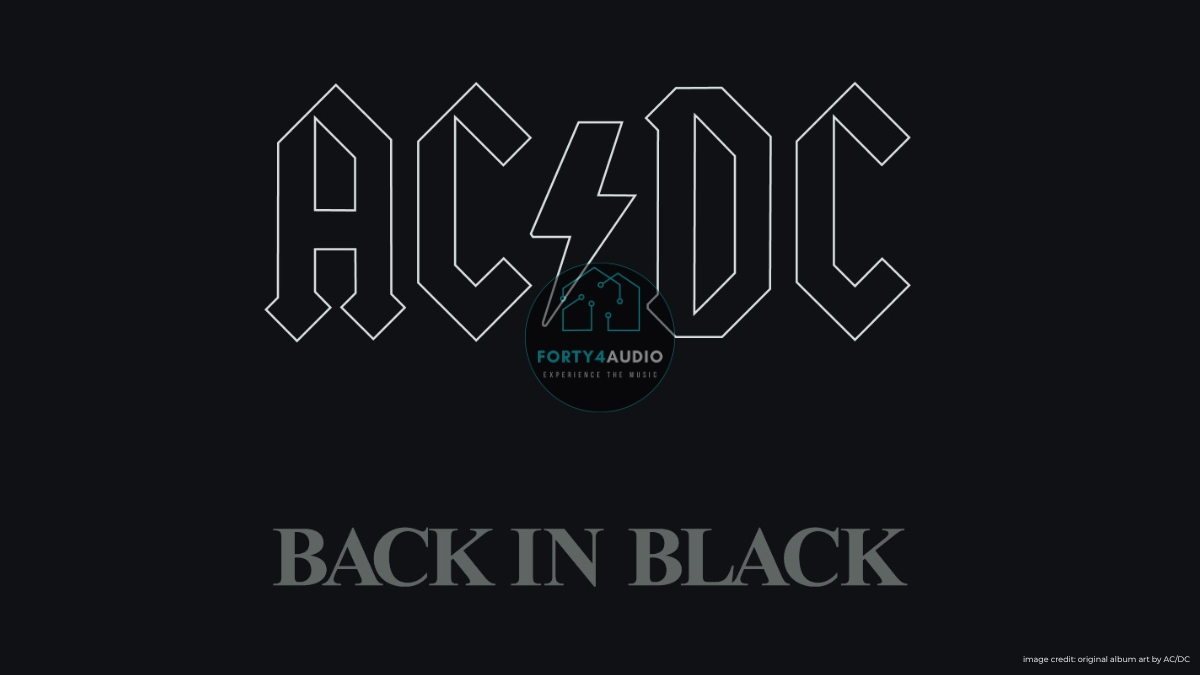
There is a particular weight to silence before the first note. Back in Black opens not with immediate celebration but with presence – a space held for memory, loss, and continuation. It carries both the echo of what came before and the first breaths of what follows, a deliberate balance of reflection and forward motion.
Across its seven weeks of recording in the Bahamas, the album was shaped with attention to time, space, and pacing; each chord, each pause, feels intentional. Listening closely, one becomes aware of its careful architecture, how energy and restraint are woven together, inviting patience and attention from the very first moment.
When the first toll of “Hells Bells” rings, it arrives with gravity. The slow, measured chimes of the bell are more than a musical device – they are a gesture of presence, of acknowledgment. Brian Johnson‘s entry is both urgent and tentative, and the rhythm section of Phil Rudd and Cliff Williams grounds the song in a steadiness that feels like resolve. Across its seven weeks of recording in the Bahamas, the album took shape with intention; every note, every pause, seems considered.
Following that opening, “Shoot to Thrill” propels the listener forward. The transition is immediate, the tension of mourning gives way to motion, almost a reckoning with survival. Here, the sequencing matters as much as the riffs themselves: the bell tolls fade into a motoric drive that is kinetic yet not chaotic. Repetition with attention reveals subtle shifts – the slight echo on a guitar chord, the accent on a backing vocal – that only patience uncovers.
“What Do You Do for Money Honey” arrives as a swaggering counterpoint. Its structure is compact, almost conversational, yet the interplay between lead and rhythm guitars is a careful dialogue. Pauses between phrases allow space for reflection; the song, like the album, is aware of its own pulse. One notices the care in Malcolm Young‘s backing vocals here, understated but vital, weaving texture around the driving riffs.
“Givin the Dog a Bone” follows with a taut, almost mischievous energy. It is easy to hear it as brash, yet the album’s arc renders it differently: it is a pivot, a release of tension built from the first three tracks. The sequencing here allows the listener to inhabit contrast, to feel how momentum can shift without losing coherence. The groove is unhurried, a rhythm that invites the body to sway even as the mind attends to detail.
“Let Me Put My Love into You” introduces an intimacy framed by electricity. The juxtaposition of sensuality and sonic force is striking when experienced in sequence. There is a patience required here: the bass and rhythm guitar sit just behind the lead, creating space for the listener to inhabit the foreground and background simultaneously. It is an album that rewards listening with attention, for these moments of texture and space reveal themselves only over repeated encounters.
The title track, “Back in Black,” marks the emotional and thematic apex. The placement at the album’s midpoint feels deliberate. It is declarative, yet its confidence is tempered by the weight of what preceded it. Johnson’s vocals, the interplay of guitars, and the driving percussion coalesce into a statement that feels simultaneously defiant and measured. Silence between riffs is as meaningful as the riffs themselves, a lesson in pacing and restraint.
“You Shook Me All Night Long” eases the momentum with a playful swing. Sequenced here, it functions as both relief and continuation, a reminder that energy can coexist with reflection. Listening closely, one discerns nuances in phrasing and emphasis that reveal themselves only when one resists the rush to the next track.
“Have a Drink on Me” invites a communal exhalation. Its mid-tempo pulse encourages immersion in sound and space. The sequencing allows the listener to feel the album’s human scale: celebration, memory, and movement interwoven. The subtle dynamics between instruments create room to breathe, offering contrast against the preceding intensity.
“Shake a Leg” jostles the rhythm again, a propulsion that anticipates the closing tracks. Its energy is kinetic but never frantic; listening slowly, one can appreciate how the guitars converse, how the drums articulate space. The song exemplifies the album’s attention to pacing and the balance between continuity and surprise.
Finally, “Rock and Roll Ain’t Noise Pollution” closes the cycle with reflection. The placement is contemplative, a bookend that honors the arc of tension and release established earlier. There is a conversational quality here, an almost gentle insistence that music inhabits life’s spaces, both loud and quiet. Silence at the end of the track – and thus the album – is weighted, allowing the listener to linger in memory, to return again and notice what might have been missed.
Back in Black is an album that exists fully in time. Its power is not in single moments but in the space between them, in the transitions, in the sequencing that guides the listener from tolling bells to the final riff. It is an album to return to, to inhabit, to listen with care, each spin revealing textures and presences unnoticed before. The records, like shadows of memory, settle differently with each encounter.