When living with The Dark Side of the Moon over time, the first thing that becomes clear is that the record does not begin with a song. It begins with a room.
Voices. Footsteps. A heartbeat. Fragments of tape.
“Speak to Me” is less a composition than a threshold. The collage of sound, assembled by Nick Mason and shaped in the studio with engineer Alan Parsons, gathers small sonic memories from across the record before we have heard them fully. Cash registers, laughter, ticking clocks. The album quietly introduces its entire emotional vocabulary before the listener has time to identify it.
Then a breath.
“Breathe (In the Air)” arrives gently, carried by the relaxed vocal of David Gilmour and the drifting harmonies of Richard Wright. After the fragmented opening, the song feels like settling into gravity. The guitars move slowly, almost reluctantly, while the lyrics written by Roger Waters introduce the quiet tension that will remain throughout the album. The words speak about ordinary life but carry a quiet awareness of how easily it slips away.
This transition matters. The movement from the collage of “Speak to Me” into the stillness of “Breathe” establishes how the record will unfold. Not as separate tracks, but as a continuous interior space.
When the synthesizer pulse of “On the Run” appears, the listener is already inside that space. Built from tape loops and analog synthesizers including the EMS VCS3, the piece creates a feeling of motion without destination. Airports. Travel. Acceleration. Anxiety.
It is easy to hear “On the Run” as an instrumental interlude, but when listening closely it feels more like a tightening of the album’s atmosphere. The pulse speeds forward while the surrounding soundscape grows increasingly unstable. Even the laughter feels uneasy.
The sudden explosion of clocks that begins Time can feel startling the first few times through the record. Over repeated listens, it begins to feel inevitable.
The track unfolds slowly, built around tom-heavy drumming from Nick Mason and reflective lyrics by Roger Waters. When the vocal finally enters, sung by David Gilmour, the song carries a quiet weight. Time here is not dramatic or abstract. It is simply passing.
A subtle return to the Breathe theme near the end of “Time” is easy to overlook. Yet that moment quietly links the beginning of the album to its expanding middle. The record begins to fold back on itself, reminding the listener that these themes are not isolated thoughts but part of the same lived experience.
From there the record drifts into one of its most unexpected passages.
The “Great Gig in the Sky” opens with piano from Richard Wright that feels almost hymn-like. Voices speak about fear of death, calmly and without drama. Then the wordless vocal of Clare Torry arrives.
Her performance moves through grief, surrender, and release without ever using language. The voice becomes another instrument, rising and falling against the piano and organ. Listening closely, the performance feels less like a solo and more like an emotional passage through the themes the album has been circling since the opening heartbeat.
When the sound of coins and a cash register cuts through the quiet, the shift is deliberate.
“Money” introduces rhythm and structure again through its unusual seven-beat groove. The tape loop of coins and paper reinforces the song’s focus on material pressure, but the arrangement keeps the music playful in its movement. The guitar solo from David Gilmour stretches the groove outward, briefly opening space before the record settles again.
The transition into “Us and Them” is one of the album’s quiet turning points. The song slows everything down.
Piano chords from Richard Wright create a wide emotional space while the lyrics reflect on conflict and division. The saxophone lines drift through the arrangement with a patient sadness. When the chorus rises, the music expands without urgency. The song feels less like an argument than a meditation on how easily people separate themselves from one another.
By the time “Any Colour You Like” appears, words are no longer necessary. The instrumental functions almost like a dream sequence between heavier reflections. Guitar and synthesizer lines swirl around one another, suggesting movement without direction. It offers a moment of psychological drift before the final stretch of the album begins.
That closing arc begins quietly with “Brain Damage”. Sung by Roger Waters, the track carries an unmistakable sense of intimacy. The lyrics reference the fragile mental state of former band member Syd Barrett, though the song never speaks in biography. Instead, it feels like a reflection on how thin the boundary can be between stability and collapse.
The melody remains gentle, almost comforting, even as the words suggest unease.
Without pause, the record flows into “Eclipse”. The arrangement gathers every element the album has introduced. Voices stack. Instruments swell. The lyrics catalogue the entire spectrum of human experience in simple phrases.
Everything under the sun.
The final chord expands and then disappears.
After the music fades, the heartbeat returns. The same pulse that began the album quietly reappears, completing the circle.
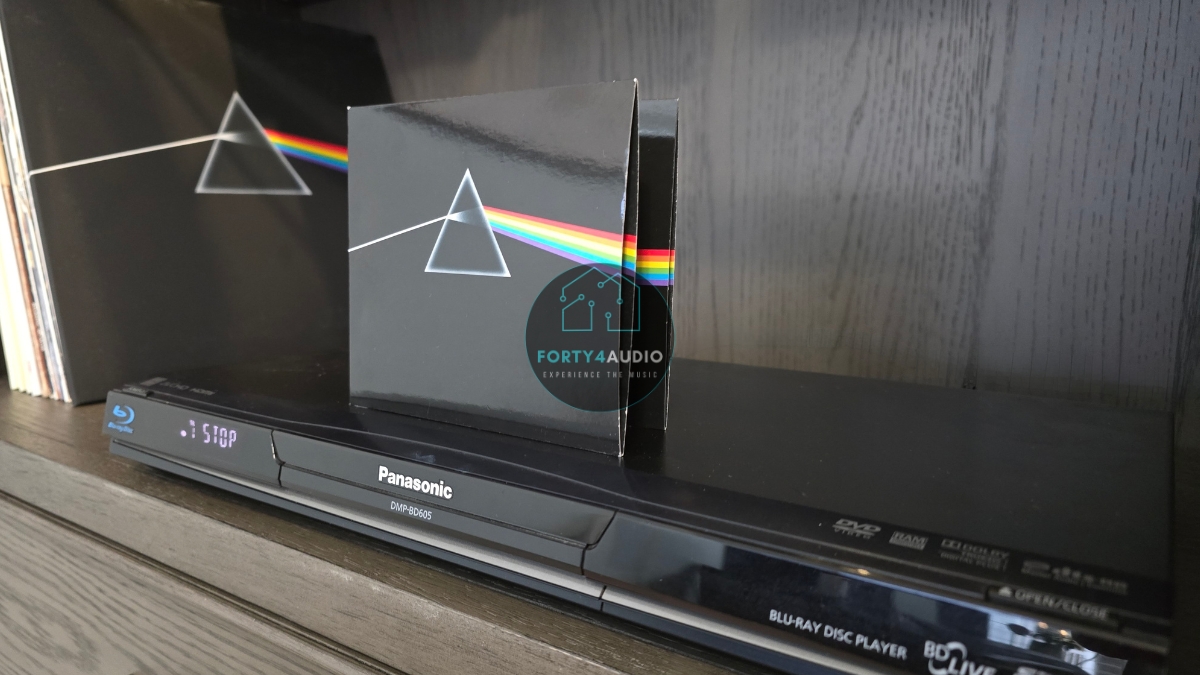
Even the cover art by Storm Thorgerson reflects this sense of simple completeness. A beam of light enters a prism and becomes a spectrum. One idea unfolding into many.
Listening to the record over years, that image begins to feel less like a design and more like a description of the album itself.
A single emotional beam entering the quiet room of the record.
Breaking slowly into color.
Pink Floyd at its best.